City right-of-way has an Engineering review
Columbia defines a temporary encroachment as work in public right-of-way and names dumpster placement as an example. The Department of Engineering’s Administration Division processes permits for work in road right-of-way within city limits. If the proposed box sits in a street, sidewalk, or other public area, resolve that approval before the drop.
Bring a location that can be evaluated. Identify the address, container footprint, dates, pedestrian route, traffic effect, and nearby fixed features. A delivery cannot turn an open-street question into an on-site guess.
Some roads add an SCDOT step
Columbia says work in state-maintained right-of-way also requires an SCDOT encroachment permit. The city allows the two applications to proceed concurrently, but both approvals must be complete before work begins. Confirm who maintains the road rather than assuming every Columbia address has the same permit path.
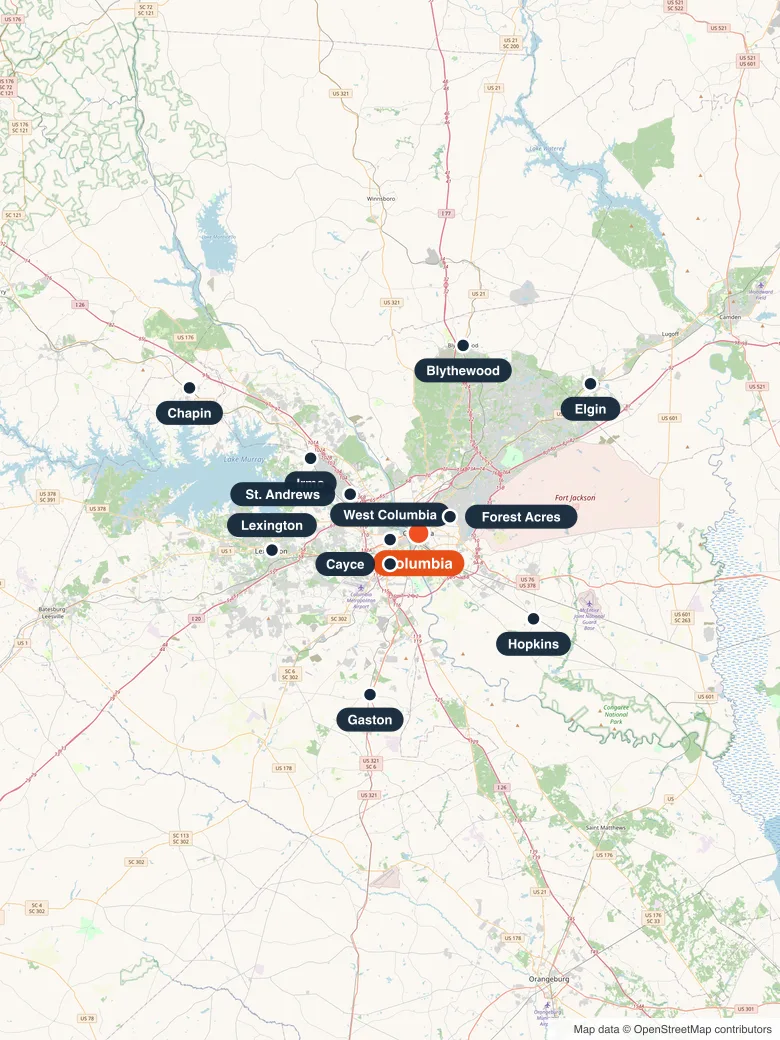
The service list extends to West Columbia, Cayce, Lexington, Irmo, Forest Acres, Blythewood, Chapin, Elgin, Hopkins, Gaston, and St. Andrews. Those places can involve other local authorities. City of Columbia instructions are not a substitute for the office responsible for a different address. Our Columbia permit guide walks through the full right-of-way process.
A private work area is usually easier to manage
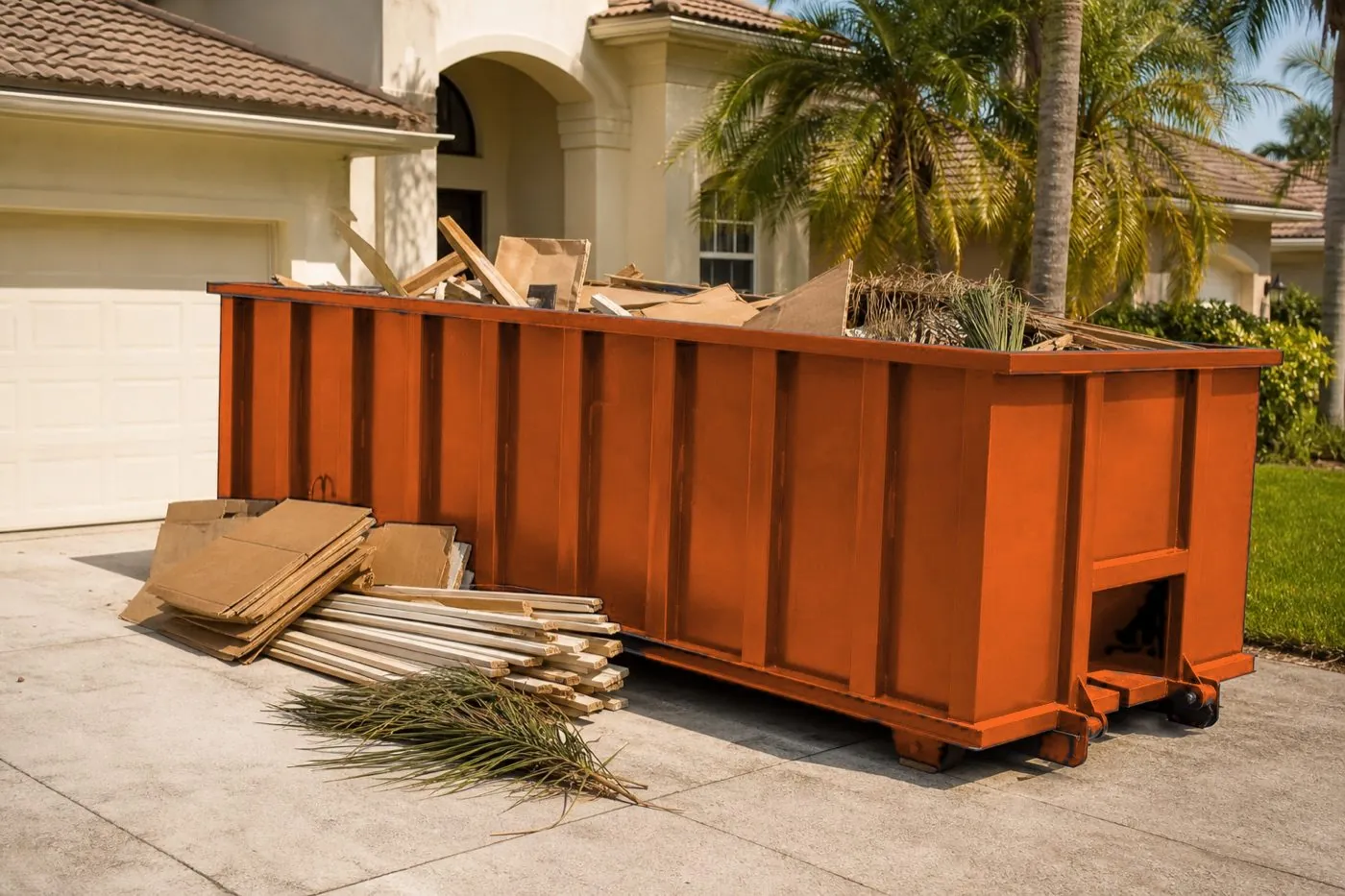
Walk the private approach before choosing the placement. Measure gates. Move parked vehicles. Report low limbs, overhead wires, soft ground, steep grades, drainage features, and tight turns. Keep the position away from utility access, hydrants, shared drives, and the paths people must use throughout the job.
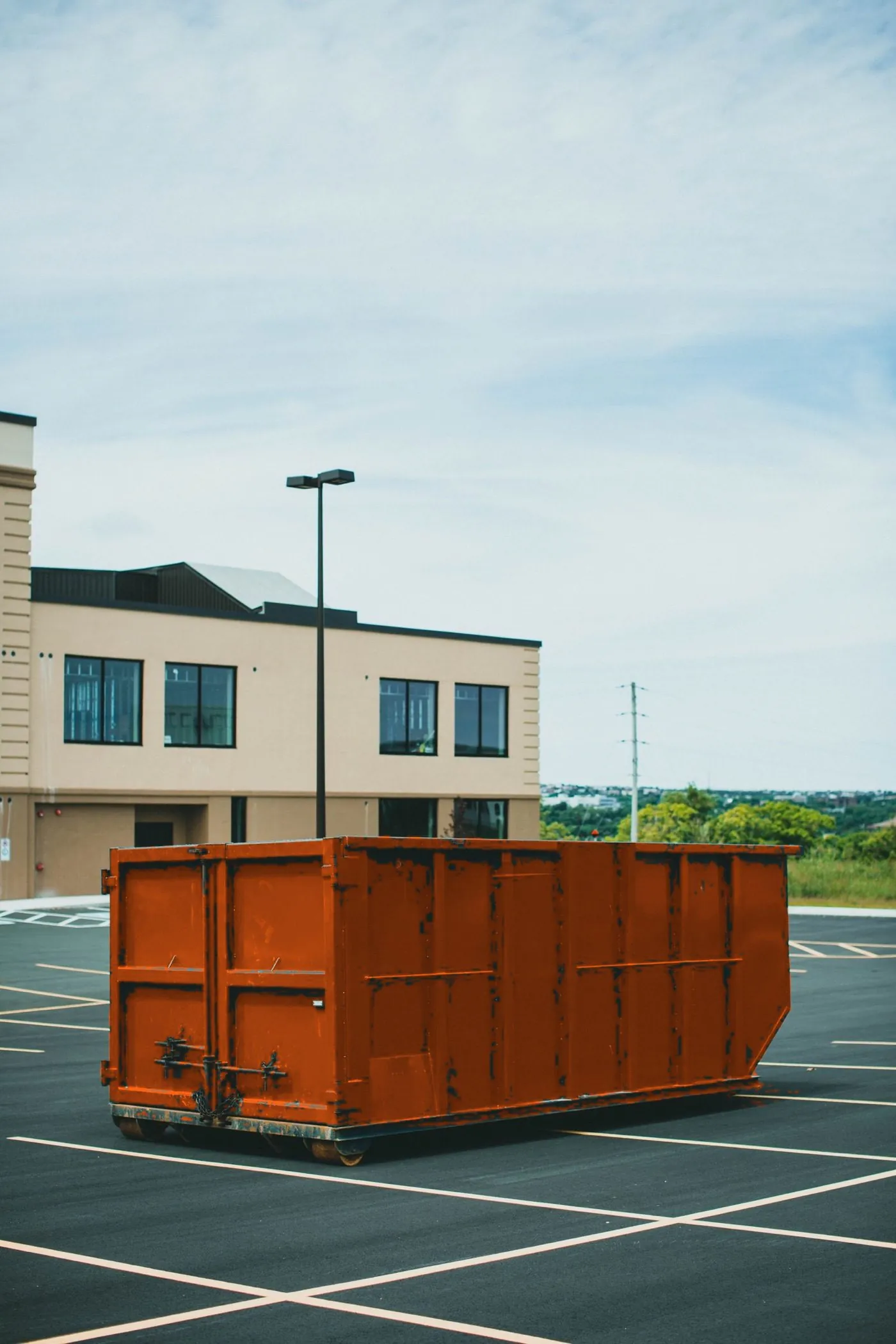
Mark the intended location and the direction the rear door should face. Think ahead to pickup. New material deliveries, contractor parking, and debris piles must not close the truck route after the container is full.
South Carolina heat does not change the load rules
Keep liquids and chemical-labeled containers out of a mixed debris pile. Separate batteries, tires, appliances, automotive products, sealed drums, and anything whose disposal route is unclear. Do not bury questionable material and hope it disappears inside the box. The load rules page lists what South Carolina landfills refuse.
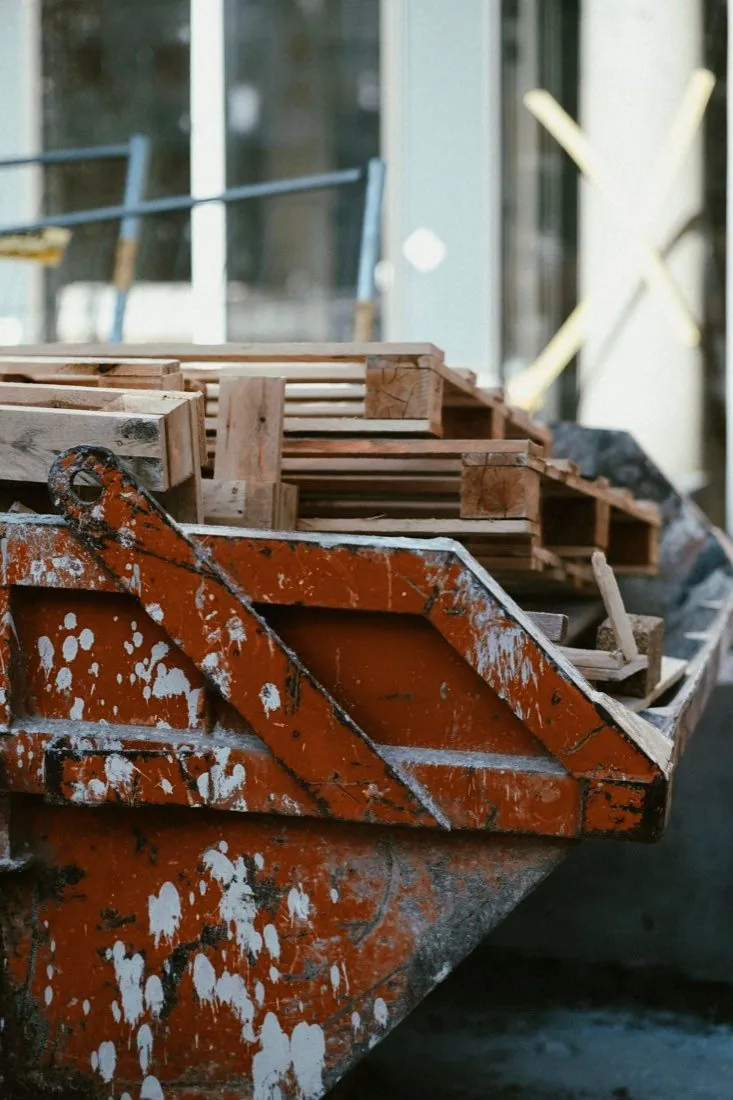
Describe dense material early. Concrete, brick, soil, and roofing can use the weight allowance faster than ordinary household items. Load evenly, keep debris below the top rail, and preserve the rear door so the box can be closed for removal.
Do not rent more service than the project needs
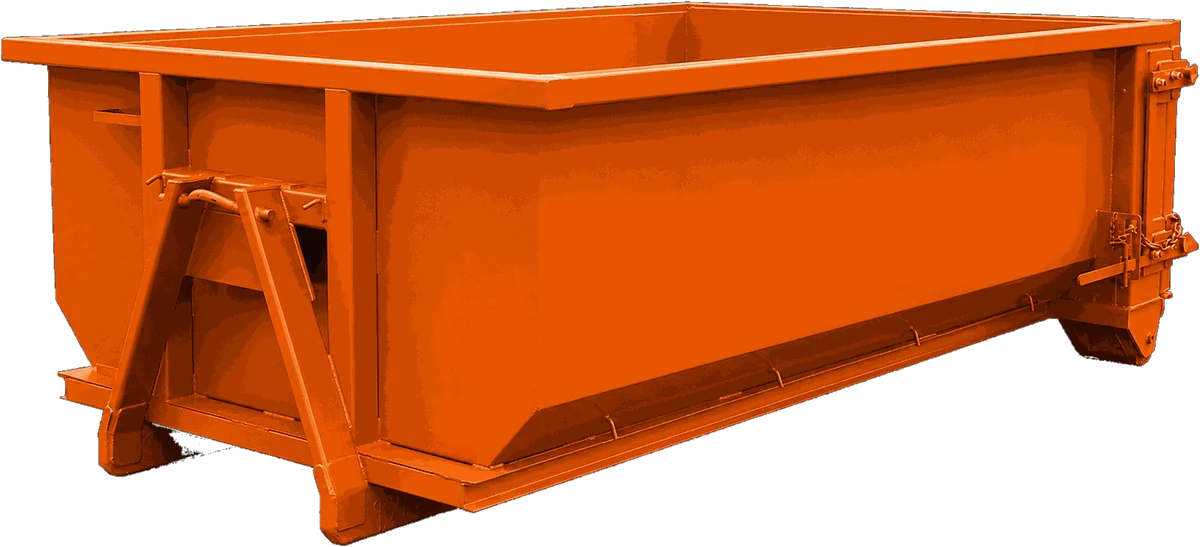
A roll-off pays off when material accumulates during renovation, construction, landscaping, or a multi-stage cleanout. It gives the site one controlled loading point. A small sorted load that already fits a safe self-haul may not need a container. A full-service junk pickup may make more sense when labor is the main problem.
Call (803) 921-8473 with the full address, debris type, estimated volume, private or public placement, access limits, and dates. We will quote the size and rental terms for the job. Columbia or the other controlling authority decides what may occupy public right-of-way.
Keep the pedestrian route in the site plan
Columbia’s temporary-encroachment guidance is paired with a pedestrian-accommodation guide. Treat the walking route as part of the placement, not as leftover space after the box is drawn. Note the sidewalk width, crossings, driveways, and places where people would be pushed toward traffic. Do not place loose debris outside the container.
When a state-maintained road is involved, keep both the city and SCDOT approvals with the job record. The city says both are required before work starts. A change in footprint, dates, or traffic effect can change the facts those approvals reviewed, so confirm material changes rather than improvising on the street.
We match the Columbia delivery notes to the approved public-space plan. Record the box dimensions, truck approach, loading side, sidewalk route, and the authority responsible for the road. Keep those details visible to everyone preparing the site. An open drop lane does not replace pedestrian accommodation, and a city encroachment record does not replace SCDOT review where the state maintains the right-of-way.